Nature has been modeling boundaries for millennia. We just forgot to look.
The thorn is not a defect. It’s a feature.
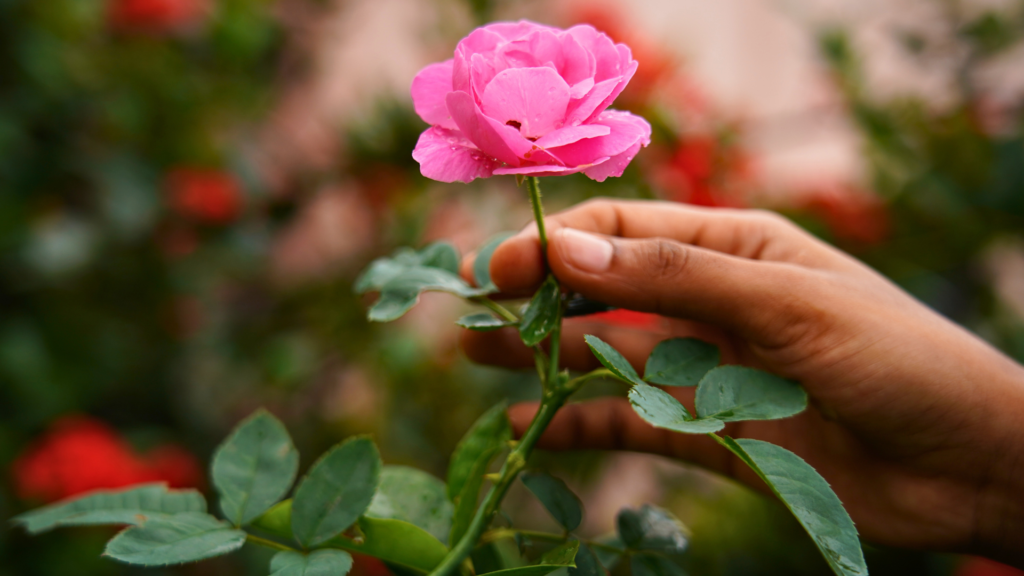
It’s the protective layer that allows for the soft, romantic expression of the flower. The boundary that creates safety for beauty to emerge.
Plants with thorns don’t apologize for their protection. They don’t soften their edges to make others comfortable. They simply exist: beautiful AND boundaried.
And there’s profound medicine in that.
This week, I’ve been writing about boundaries, why they’re essential, why women especially struggle with them, why saying “no” protects your “yes.”
But nature has been teaching this lesson all along.
Let me introduce you to three thorny allies who have mastered the art of protection: Rose, Hawthorn, and Bramble.
Not only are they iconic, they are profound teachers . And their medicine, both physical and spiritual, can support you in setting the boundaries you need.

Across cultures and throughout history, thorns have represented:
In Rebecca Campbell’s The Rose Oracle, the THORN card carries this teaching:
“Most roses are armored with spiky thorns and prickles of various shapes and sizes. These sharp protectors act like knights defending their queen, clearly setting the necessary boundary and conditions for Her to do what She was born to do.”
The rose doesn’t reach for the bee. It doesn’t grasp or overstretch. It embraces what it is fully and allows Life to come to it. The thorn asks: “Are you worthy of this beauty? Are you willing to be careful with it?”
In The Rose Codes, Mariya Nurislamova reveals the rose as sacred geometry, the five-pointed star representing Spirit, Mind, Heart, Truth, and Love.
Each point creates a boundary. Each boundary creates the structure that holds the sacred.
The five-petaled rose represents the sacred geometry of the feminine path. When Venus orbits the Sun over eight years, she traces a five-pointed flower pattern in the sky, the Venusian Rose. It represents a connection between the cosmos and earthly life, and the unfolding of human consciousness .
Your boundaries are not arbitrary restrictions. They’re the sacred architecture of your life.
Just as the five petals create the container for the rose’s center, your boundaries create the container for your essence: your creativity, your energy, your sacred heart.
Latin name: Rosa spp.
Parts used: Petals, hips, thorns
Energetics: Cooling, moistening, astringent
Rose petals are gentle, opening, heart-healing:
Rose hips are nourishing and protective:
The astringent tannins in rose literally tone and tighten tissue, creating a physical boundary.
Studies have shown rose helpful for anxiety[^1], immune support[^2], and skin healing[^3]. The physical body and the energetic body are connected. When you tone tissue physically, you’re also supporting energetic boundaries.
It’s no wonder the rose is a quintessential symbol for romantic love in pop culture, but where did this originate?
In folklore, the rose represents love, beauty, devotion, but the thorns represent discernment. Not everyone gets access to the rose. You must approach with respect, care, and intention.
In Sleeping Beauty, the entire castle is surrounded by a thicket of thorny roses: a boundary so fierce that only true love (the right person, at the right time) can pass through. The thorns protect the sleeping princess until she’s ready to awaken.
The rose has been sacred to goddesses throughout time: Aphrodite, Isis, Inanna, Mary Magdalene, Mother Mary. In The Rose Codes, the Holy Grail is depicted as two circles: the Circle of Christ (masculine consciousness) held within the Circle of Magdalene (feminine Sophia consciousness).
The chalice is a boundary. Without the container, the sacred cannot be held.
Rose teaches: Your heart can be both open AND protected.
You don’t have to harden your heart to protect it. You don’t have to close off to stay safe.
The rose is soft, fragrant, beautiful…AND thorny.
It invites approach with care. It asks for respect. It says: “You can come close, but you must be gentle with me.”
This is the heart’s boundary.
Not a wall. Not coldness. But discernment.
From The Rose Oracle BREATHING ROSE card: “Healing is a slow, steady process… somehow find the courage to open through the agony, the difficulty, and the hurt. To let Life soften us not harden us.”
When to work with Rose:
How to use:
Rose thorn talisman: Carry a rose thorn as a reminder that beauty and boundaries coexist.
Latin name: Rubus spp.
Parts used: Leaves, berries, roots
Energetics: Astringent, cooling, toning
Raspberry leaf (the queen of uterine tonics):
Blackberry leaf/root:
Studies confirm astringent tannins in bramble plants support wound healing, anti-inflammatory effects, and gut barrier function[7][8].
Why this matters for boundaries:
Astringency = boundary creation at the tissue level.
When tissue is loose, floppy, permeable, boundaries are weak. Astringent herbs literally tone and tighten, creating structure and integrity.
This is true physically (gut lining, uterine wall, skin) and energetically. Weak boundaries = feeling invaded, overwhelmed, unable to say no.
In The Rose Codes, the womb is depicted as the sacred axis connecting the Universe → Milky Way → Individual. The womb is nature’s perfect boundary: protective, creative, life-giving.
Raspberry leaf strengthens that boundary.
Bramble thickets are impenetrable. Anyone who’s tried to walk through a blackberry patch knows this. They’re aggressive colonizers, spreading rapidly, defending territory fiercely.
But inside that thorny fortress? Abundant berries. Nourishment. Medicine. Sweetness.
The bramble teaches: When you protect your space fiercely, you create the conditions for internal thriving.
In European folklore, raspberry was linked to fertility and kindness. The red juice invoked the energy of blood running from the heart, carrying love and nutrition through the body.
Magic of patience in fertility: First-year raspberry canes don’t produce fruit, but they’re essential for establishing the root system, filling canes with strength and energy needed for future abundance.
Metaphor: Not all effort bears immediate fruit. Some seasons are for root-building. Boundaries protect that process.
Bramble says: When you protect your space fiercely, you create abundance within.
Bramble doesn’t apologize. It doesn’t soften its edges. It claims territory unapologetically and rewards those who approach with respect.
When to work with Bramble:
How to use:
Bramble thorns: Collect and place around your space as protective talismans (doorways, windows, altar).
Drink the teas, take the tinctures, use the remedies. The physical body and the energetic body are connected. When you tone tissue physically, you’re also supporting energetic boundaries.
Go find a rose bush, a hawthorn tree, a blackberry thicket. Watch how they exist in the world.
Do they apologize for their thorns? Do they soften their edges to make others comfortable?
Never. They simply are. Beautiful and boundaries. Soft and protected. Abundant and fierce.
That’s the medicine.
In The Rose Codes, the five-pointed star forms the shape of the rose, and represents the sacred architecture of wholeness: Spirit, Mind, Heart, Truth, Love.
Each point creates a boundary. Together, they create the container for your essence.
The Holy Grail is not just a cup; it’s the sacred container formed by the union of masculine and feminine consciousness. Without the boundary of the chalice, the sacred water spills and is lost.
Your boundaries are not walls keeping love out. They’re the sacred vessel that allows you to hold what matters most.
Nature doesn’t struggle with boundaries the way we do.
A rose doesn’t question whether its thorns are “too much.”
A hawthorn doesn’t apologize for guarding the threshold.
A bramble doesn’t soften its edges to make passage easier for those who haven’t earned it.
They simply exist: beautiful, abundant, and fiercely protected.
And that’s the lesson.
Your boundaries are not a flaw. They’re necessary for you to be in your fullest, authentic expression.
They’re not walls that keep love out. They’re thorns that protect your tender heart, your creative center, your sacred space.
They’re the “yang” to the “yin,” creating the safe container necessary for the beautiful, soft petals to unfold.
It’s the masculine structure to hold the beautiful feminine free flow/chaos/creation.
They allow the right people in at the right time, and they guard against violation, depletion, intrusion.
So when you’re struggling to set a boundary, when you feel guilty for saying “no,” when you wonder if you’re being too difficult, I encourage you to remember the medicine of the thorns.
Embrace them as part of your beauty. Just like the rose.
Make Saying “No” Cool Again: Why Boundaries Are Your Superpower
Make Female Empowerment Cool Again: Reclaiming Your Power by Saying No
Real Love Requires Boundaries: Why Valentine’s Day Got It Wrong
Fire Horse Energy & Boundaries: How to Activate Without Burning Out
Natural Medicine Cabinet Makeover Guide
Postpartum Healing: Nourishing Foods, Herbs & Practices for Recovery (for more on raspberry leaf)
Ready to work with plant allies for boundary support?
With thorns and tenderness,
Marina
[^1]: Mohebitabar, S., et al. 2017. “Therapeutic efficacy of rose oil: A comprehensive review of clinical evidence.” Phytomedicine 34: 76-83.
[^2]: Guimarães, R., et al. 2013. “Nutrients, phytochemicals and antioxidant activity of the edible rose hip fruits (Rosa canina L.).” Food Chemistry 140(1-2): 184-191.
[^3]: Lattanzio, F., et al. 2018. “Role of Rosa canina L. for wound healing.” Journal of Ethnopharmacology 225: 282-294.
[^4]: Holubarsch, C. J., et al. 2008. “Survival and prognosis: investigation of Crataegus extract WS 1442 in congestive heart failure (SPICE).” European Journal of Heart Failure 10(12): 1255-1263.
[^5]: Pittler, M. H., et al. 2008. “Hawthorn extract for treating chronic heart failure.” Cochrane Database of Systematic Reviews.
[^6]: Keel, Claudia. “Hawthorn.” ArborVitae School of Traditional Herbalism. Herbal monograph.
[^7]: Patel, A. V., et al. 2004. “Therapeutic constituents and actions of Rubus species.” Current Medicinal Chemistry 11(11): 1501-1512.
[^8]: Rao, A. V., and D. M. Snyder. 2010. “Raspberries and human health: a review.” Journal of Agricultural and Food Chemistry 58(7): 3871-3883.
Books:
Oracle Decks:
Online:
Herbal Monographs:
→ Want more herbal wisdom like this? Start here.
If you’re feeling stuck, overwhelmed, or unsure where to start on your herbal journey, I’m here to help.
Let’s talk it through together.
I offer a free discovery call where we’ll explore your health or holistic professional career goals and map out supportive first steps tailored just for you.
Book a Complimentary Health Consultation
Book a Holistic Professional Tea Chat
 Ready to transform your medicine cabinet? The Natural Medicine Makeover Guide helps you swap synthetic fixes for safe, effective natural remedies. Packed with expert tips from a pharmacist + herbalist, it’s your go-to resource for a healthier, holistic lifestyle. Plus, see my favorite products in my herbal dispensary.