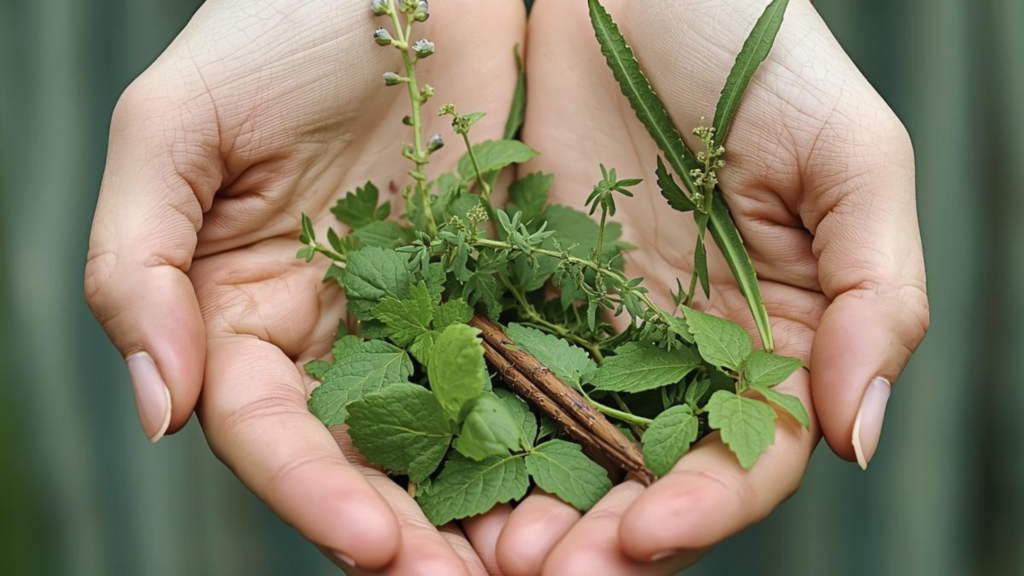
There’s a moment in every herbalist’s journey when the plants stop being objects of study and become something else entirely.
For me, it happened after a dose of a flower essence I experimented with back in herbal school. It was an essence of nettle, just simple, humble nettle, but something had shifted. A couple of days later, I had a deep cathartic release, rather suddenly. And as I was crying my heart out, a word written on the flower essence bottle came to me: “abandonment.” Deep down, I recognized that was exactly what I was afraid of.
I realized I wasn’t just ingesting a plant. I was in relationship with it: metaphysically, energetically, spiritually.
That’s when I first understood, at a visceral level, what the Shipibo shamans of the Peruvian Amazon have known for millennia: Plants aren’t passive medicine. They’re teachers. And to learn from them requires something far deeper than swallowing a capsule.
It requires dieta.

The word “dieta” translates simply as “diet,” but that translation does the practice a profound disservice.
A master plant dieta is a sacred agreement, a contract, if you will, between a person and a plant spirit. It’s one of the most fundamental therapeutic and spiritual practices in Amazonian traditional medicine, particularly among the Shipibo people of Peru’s Ucayali region.
Here’s how it works: A curandero (traditional healer), their apprentice, or even someone seeking healing enters into a committed relationship with a specific plant. This might be ayahuasca, but more often it’s one of the hundreds of other medicinal plants growing in the rainforest: Bobinsana, Chiric Sanango, Ajo Sacha, or powerful trees like Ayahuma or Renaco.
The dieta begins with an opening ceremony, typically during an ayahuasca ritual, where the intention is declared through sacred songs called icaros. From that moment forward, the dieter follows strict guidelines that typically include dietary restrictions, social isolation, abstinence from sexual activity, and daily ingestion of the plant, usually as a tea prepared from leaves, bark, or roots.
Research published in the Journal of Ethnopharmacology describes the dieta as a “retreat-like intervention involving lengthy periods of social, behavioural, and alimentary restrictions, while ingesting specially prepared plant substances.” The interplay between these restrictions and the plants ingested creates what practitioners describe as a heightened sensitivity: an opening that allows the dieter to receive healing, strength, guidance, and knowledge directly from the plant spirit [1].
The duration varies based on the plant and the purpose. Simple plants like Ajo Sacha might require 10 days. More demanding teacher plants like Chiric Sanango typically need 20 days minimum. Powerful master trees (palos maestros) can require 30 to 40 days or longer to establish a genuine connection.
When the agreed-upon time is complete, the dieta is formally closed in another ceremony, where tremendous gratitude is expressed to the plant spirit. In some traditions, a secondary morning ceremony follows, where the dieter performs a specific dance and song, then consumes particular “strong” foods, such as hot peppers, salt, onions, garlic, lemon/lime, to gently transition back to normal eating.
But the relationship doesn’t end there. A post-dieta period follows, during which the bond with the plant spirit remains active and continued respect is crucial.
My pharmaceutical training wants to understand mechanisms. So let’s talk about what’s actually happening here.
Plants in Amazonian medicine, as researcher Daniela Peluso notes, “are not used to change the user’s consciousness but to imbue the body with certain properties.” The dieta functions through a form of purification, both bodily and spiritually, though this isn’t easily reducible to biology alone. It interfaces with culture, behavior, and affective states in complex ways.
Research in Frontiers in Pharmacology examined plant dietas as medical practices and found they don’t fit neatly into Western frameworks of “set and setting” that dominate psychedelic research [2]. The dieta isn’t contingent upon using ayahuasca or other hallucinogens at all. It has wide-ranging applications understood to work through metabolic, spiritual, and energetic transformation.
The dietary restrictions aren’t arbitrary. Fasting and caloric restriction have been practiced across cultures for millennia because they trigger profound adaptive cellular responses. A comprehensive review in Nutrients documented how fasting reduces oxidative damage and inflammation, increases energy metabolism, and boosts cellular protection through autophagy, the body’s process of cleaning out damaged cells and regenerating newer, healthier ones [3].
The social isolation and sensory deprivation amplify these effects. When external stimulation decreases, internal awareness intensifies. The nervous system quiets. Subtle sensations become perceptible. Dreams gain clarity and significance.
And then there’s the plant itself – consumed daily, building in the system, its chemical constituents accumulating, its energetic signature imprinting.
Traditional healers describe developing a capacity to “see” or communicate with the spirit realm through sustained dieta practice. Maestro curanderos have used fasting, plant diets, and seclusion for generations to seek guidance from plant spirits and obtain the knowledge needed to heal others. Young initiates often diet on master plants for months or even years at a time.
Whether we interpret this through the lens of neuropharmacology, altered states of consciousness, placebo response, or genuine spiritual communion matters less than the observable fact: Something profound happens.
Here’s where I need to get real with you.
The globalization of ayahuasca and Amazonian plant medicine has created what researchers call “cultural dilution.” Many retreat centers now offer dietas to Western seekers, but the practice has been simplified, commercialized, and sometimes misrepresented.
As documented in research on the ayahuasca diaspora, much of the contemporary dieta prescribed at Western retreat centers is built on assumptions rather than traditional practice or scientific evidence. The common restrictions, such as avoiding salt, sugar, alcohol, pork, processed foods, caffeine, sexual activity – aren’t uniformly rooted in indigenous tradition [4].
In traditional Amazonian settings, dieta protocols are nuanced and specific. They’re tailored to the individual, the plant, and the purpose. The terms are negotiable. For instance, a plant spirit might initially request a year-long commitment, but the curandero might negotiate a shorter duration until reaching a mutually acceptable timeframe.
Some restrictions do have pharmacological rationale. Ayahuasca contains MAOIs (monoamine oxidase inhibitors), which can interact dangerously with certain substances like SSRIs or tyramine-rich foods [5]. But many other common restrictions lack compelling scientific support.
That doesn’t mean they’re useless. The benefits participants report (feeling more grounded, focused, spiritually attuned) likely stem from the act of restriction itself. In many spiritual traditions, self-imposed limitations demonstrate readiness, build discipline, and shift consciousness.
The point isn’t to dismiss the practice. It’s to approach it with discernment.
If you’re called to work with Amazonian plant medicine, do your research. Seek teachers with genuine lineage and training. Understand that a 10-day retreat, while potentially powerful, differs vastly from the months or years traditional apprentices spend in dieta. Be wary of anyone promising instant shamanic abilities or claiming their specific protocol is the “only authentic” way.
And recognize that the most profound teaching of the dieta isn’t about following rules; the medicine is being in genuine relationship with the plants.
So what about those of us who aren’t traveling to the Amazon? Who have jobs, families, responsibilities?
Can we work with plant allies in a way that honors the spirit of dieta while respecting the constraints of modern life?
I believe we can.
And I believe we must.
Because at its core, dieta is about one thing: paying attention. Creating conditions that allow us to receive what the plants have to teach.
Here’s what a “social” dieta practice might look like, from the comfort of your home:
Start with a single herb. Not ten. Not a complex formula. One plant.
This might be a plant that’s called to you through ancestral lineage, dreams, repeated encounters, or persistent intuition. Or it might be a plant recommended by an experienced herbalist for a specific health concern you’re addressing.
Some gentle plants well-suited for a social dieta work include nettle, tulsi (holy basil), rose, hawthorn, milky oats, or mint. More intense allies like sage, mugwort, wormwood, or psychoactive plants should only be approached with proper training and support.
Before beginning, clarify your intention. Why are you working with this plant? What do you hope to learn or heal? How long will you commit to this practice?
Write it down. Speak it aloud. Make it conscious and deliberate.
Traditional dietas involve a formal opening ceremony, but you can create your own ritual. Light a candle. Burn incense. Sit in meditation. Introduce yourself to the plant spirit and state your intention clearly.
Consume your chosen plant daily, ideally at the same time each day. This could be as tea, tincture, food, or even topical application, depending on the plant.
The key is consistency and mindfulness. Don’t just gulp it down while scrolling your phone. Prepare it with intention. Sit with it. Notice the taste, the sensation, the subtle effects.
A study on intermittent fasting combined with Ayurvedic herbs found that the combination significantly reduced anxiety and inflammation in test subjects [6]. The synergy between dietary discipline and herbal medicine amplifies both practices.
You don’t need to eliminate all salt, sugar, and spice (unless specifically guided to do so for medicinal reasons). But you can simplify.
Eat whole foods. Reduce processed items. Avoid alcohol during your dieta period. Notice how your body responds to what you consume.
Traditional dietas emphasize bland, simple foods because they reduce sensory stimulation and allow subtle energies to become perceptible. At home, you’re aiming for the same principle: less noise, more signal.
Research on fasting traditions across cultures, documented in a comprehensive review in Nutrients, shows that caloric restriction and dietary simplification trigger beneficial metabolic changes including reduced inflammation, enhanced autophagy, and improved insulin sensitivity. You don’t need to fast completely to receive benefits [3].
Social isolation isn’t practical for most of us. But we can create pockets of solitude.
Maybe you wake up 30 minutes earlier to sit quietly with your plant tea before the household stirs. Maybe you take a daily walk alone in nature. Maybe you designate one evening a week as screen-free, phone-off time for journaling and reflection.
The point is carving out spaciousness, allowing room for the plant’s teaching to emerge.
In traditional dieta, dreams are where much of the teaching happens. The plant spirit appears, offering guidance, showing visions, revealing knowledge.
Keep a journal by your bed. Record whatever fragments you remember upon waking. Don’t interpret or analyze initially, just document.
Over time, patterns may emerge. Symbols may recur. Messages may clarify.
Notice physical sensations, emotional shifts, thought patterns, synchronicities, attractions, aversions. The plant is communicating through all of these channels.
You might feel inexplicably drawn to certain colors, foods, or activities. You might experience unusual dreams or emotional releases. Physical symptoms might arise and resolve.
Don’t pathologize these experiences or rush to “fix” them. Simply observe. Trust that the plant is communicating with you and the dieta is working.
Sexual activity is traditionally restricted during dieta because sexual energy and spiritual energy are seen as interchangeable in many Amazonian traditions. At home, this is your choice.
What matters more is identifying your personal distractions: whatever pulls you away from presence. Social media? Excessive entertainment? Drama with friends? Overworking?
Choose one or two things to abstain from during your dieta period. This isn’t punishment. It’s a promise to yourself, and an act of devotion for your chosen plant ally. It is something you give up in exchange for creating energetic space.
Traditional Chinese Medicine has used fasting combined with herbal support for over 3,000 years through practices like Pi Gu. Modern research on herbs during fasting shows that certain plants support the detoxification and metabolic processes activated during dietary restriction.
Milk thistle supports liver function and detoxification pathways. Dandelion root promotes bile secretion. Schisandra enhances hepatic enzymes and provides adaptogenic support. Turmeric reduces inflammation. Consider doing a preparation phase for the home dieta with some of these allies to gently cleanse and prepare the body to receive the medicine of the master plant.
When your agreed-upon time is complete, don’t just stop abruptly. Create a closing ritual.
Thank the plant spirit. Acknowledge what you’ve learned. State how you intend to continue the relationship and apply the teachings.
Then gently reintroduce variety into your diet and routine. The transition matters.
I’ve done several social/home dietas over the years, around 4 weeks each.
My first dieta with calendula was part of my materia medica project back in herbal school. I worked with the plant regularly over the span of a month, researching its properties for a formal presentation, and experimenting with home recipes – such as infusions, soups, tinctures, and topical oil preparations. It is now the first project that I assign to my own herbalism students. My dieta with calendula wasn’t formal, and I didn’t restrict myself to any particular diet or way of doing things. But it was still profound to connect with a plant in an intentional way, which was a first for me. And it opened the door to future plant experiences. I look back at that time with fond memories, and calendula will forever hold a special place in my heart.
My second diet was with mugwort, a powerful dreaming herb. I was invited to participate in a small intimate group container guided by an experienced Shaman over video calls. It felt divinely orchestrated at a time in my life when I wanted to slow down and be in my own energy, outside of my usual ambitious projects and coaching investments. The other two participants were local, so we created beautiful opening and closing ceremonies honoring mugwort, adorning ourselves and our altars with the plant. We brought offerings of music, songs, and art that we created. I committed to a very strict diet, and followed through. I spent time visualizing and meditating to the sounds of drumming, and drummed along to the rhythm. I re-started my practice of recording my dreams, some of which were profound and symbolic during this time. Conflicts that had been troubling me resolved with unexpected ease.
My most recent dieta with nettle was more gentle and flexible. I joined an online container with 3 teachers who guided the virtual group with beautiful herbal, astrological and symbolic teachings. Most importantly, they reinforced my own autonomy in guiding my own journey with grace and compassion. Nettle taught me about resilience, boundaries, and nourishment – qualities I desperately needed at the time. The teaching came through physical sensations (increased energy, stronger hair and nails) and through dreams featuring my deepest desires and processing my emotions. When I emerged from that dieta, my intuition had sharpened dramatically. I could “read” situations and people with startling accuracy.
The plants teach what we need, not necessarily what we want.
You don’t need to fly to Peru to develop relationship with plant teachers.
You don’t need ayahuasca to access plant wisdom.
What you need is commitment, consistency, and receptivity.
The plants are already here, already offering their medicine, already willing to teach. The question is whether we’re willing to create the conditions to receive.
A home dieta practice bridges the ancient and the modern. It honors indigenous wisdom while adapting it to contemporary life. It acknowledges that transformation doesn’t require dramatic ritual or exotic substances; what it requires is daily devotion to something greater than ourselves.
Start small. Choose one plant. Commit to 7 days. See what emerges.
The plants have been waiting to talk to you.
All you have to do is listen.
What plant has been calling to your attention lately? Have you noticed any herbs appearing repeatedly in your awareness: through reading, dreams, or physical encounters? What plant did your ancestors work with?
If you were to enter into a conscious relationship with a single plant for the next moon cycle, which would you choose and why?
Interested in what every aspiring herbalist needs to know?
Learn the practical herbal traditional assessment + protocols, dosing, and interactions and walk through a case study showcasing the herbal approach: check out the Clinical Herbal Case Study Workshop. (And yes, if you’re a healthcare professional, this is perfect for you!)
Just want to dip your toes into herbal and holistic solutions? Start here.
Works Cited:
→ Want more herbal wisdom like this? Start here.
If you’re feeling stuck, overwhelmed, or unsure where to start on your herbal journey, I’m here to help.
Let’s talk it through together.
I offer a free discovery call where we’ll explore your health or holistic professional career goals and map out supportive first steps tailored just for you.
Book a Complimentary Health Consultation
Book a Holistic Professional Tea Chat
 Ready to transform your medicine cabinet? The Natural Medicine Makeover Guide helps you swap synthetic fixes for safe, effective natural remedies. Packed with expert tips from a pharmacist + herbalist, it’s your go-to resource for a healthier, holistic lifestyle. Plus, see my favorite products in my herbal dispensary.