

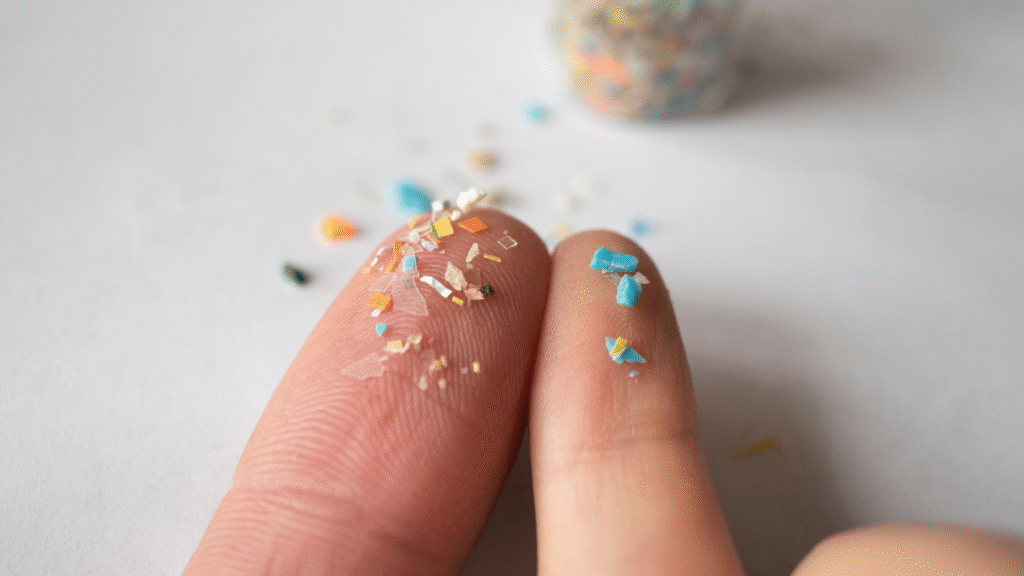
I recently shared my concerns about the rising levels of microplastic exposure and its connection to obesity, not to mention environmental concerns. Now you may be wondering:
“Isn’t it just about calories?”
“What can I do about it, when I don’t even have the energy or means for basic self-care?”
“How can I make a difference in the grand scheme of it all?”
Today, I want to connect the dots in a way that might fundamentally change how you think about your health and energy levels, as well as your role in the ecology of global health.
Here’s what most people don’t understand: microplastics aren’t just floating around harmlessly in your body. They’re actively sabotaging your mitochondria: the powerhouses that produce every bit of energy your cells need to function.
And when your mitochondria can’t do their job, everything falls apart.

Microplastics are tiny plastic particles less than 5 millimeters in size. Nanoplastics are even smaller (less than 1 micrometer) which means they can penetrate cell membranes and even cross the blood-brain barrier.
They’re everywhere. In the air you breathe. The water you drink. The food you eat. The clothes you wear.
Recent studies have detected microplastics in human blood, lungs, placentas, breast milk, and even brain tissue [1]. And we’re not just exposed to them; we’re accumulating them.
And unlike natural substances your body knows how to process, plastics persist. They accumulate in tissues and wreak havoc at the cellular level.
Every single cell in your body (except red blood cells) contains hundreds to thousands of mitochondria. These tiny organelles convert the food you eat and oxygen you breathe into ATP—adenosine triphosphate—the energy currency your cells use for everything.
Want to think clearly? You need ATP.
Want to move your muscles? ATP.
Want to digest food, regulate hormones, fight infections? ATP, ATP, ATP.
When mitochondria function well, you have energy, mental clarity, and vitality. When they don’t? You get fatigue, brain fog, weight gain, inflammation, accelerated aging, and increased risk for virtually every chronic disease [2].
Multiple recent studies show that microplastics and nanoplastics directly damage mitochondria through several mechanisms [3]
Microplastics trigger massive overproduction of reactive oxygen species (ROS): unstable molecules that damage DNA, proteins, and lipids. This creates chronic oxidative stress that damages mitochondrial membranes and impairs function [4]. Think of it like a factory fire that never gets put out. (And your body tries to deal with it by spiking cholesterol, by the way.)
Plastic particles physically interact with mitochondria, causing direct structural damage. Studies show alterations in mitochondrial shape, swelling, and disruption of membranes where energy production occurs Research in intestinal cells exposed to nanoplastics showed irreversible damage within just 24 hours [5].
Healthy mitochondria constantly undergo fusion and fission to maintain quality control. Microplastics disrupt this balance, leading to accumulation of damaged mitochondria that can’t be cleared [6] It’s like a recycling system that’s broken…and the trash just piles up.
All of the above results in one devastating consequence: your cells can’t make enough energy. Studies show microplastic exposure significantly reduces ATP levels [7] Less ATP means less energy for every cellular process: thinking, moving, healing, everything.
Mitochondria have their own DNA that’s particularly vulnerable to damage. Microplastic exposure causes mtDNA damage and triggers inflammatory pathways that contribute to disease [8] And it’s not just about us. There’s growing concern about transgenerational effects: the damage we’re experiencing now could be passed to our children.
When your mitochondria are damaged and can’t produce energy efficiently, your metabolism fundamentally changes:
Impaired Fat Burning – Mitochondria are where fat burning occurs. When damaged, your body loses its ability to efficiently burn fat for fuel, even if you’re eating well and exercising.
Increased Fat Storage – Studies show microplastic exposure activates genes involved in fat cell formation and increases lipid accumulation. Research in mice found that polystyrene microplastics caused weight gain, excessive lipid accumulation, increased appetite, and decreased activity [9].
Disrupted Gut Microbiome – Microplastics alter gut bacteria, increasing pathogenic species and decreasing beneficial ones. A human study of young adults who frequently ate takeout food (high microplastic exposure) found higher BMI, altered gut microbiota, and metabolic changes [10].
Chronic Inflammation – Damaged mitochondria release danger signals that activate inflammatory pathways. This drives insulin resistance, metabolic syndrome, and weight gain, regardless of calorie intake [11]!
This is why someone can “eat clean” and exercise regularly but still struggle with weight and fatigue. The plastics are interfering at the cellular energy level.
Mitochondrial dysfunction is implicated in virtually every age-related disease: neurodegenerative diseases (Parkinson’s, Alzheimer’s), cardiovascular disease, type 2 diabetes, autoimmune conditions, accelerated aging, and cancer [12].
As I’ve written about in Pharma’s Dirty Secret: The Petrochemical Roots of Modern Medicine, we’re living in a world built on petroleum-derived products. Plastics, pharmaceuticals, synthetic pesticides all come from the same source, disrupting our biology in ways we’re only beginning to understand.
In the Kitchen:
In Your Home:
For more practical swaps, check out Crunchy but Make it Doable.
Nutrition:
Lifestyle:
Herbal Support:
Here’s what frustrates me as both a pharmacist and herbalist: we’re treating symptoms of mitochondrial dysfunction with more synthetic chemicals while ignoring the root cause. Even when we switch to more holistic modalities, they’re often rooted in the same flawed consumerist and unsustainable approaches and delivery systems as the conventional models of care.
We need to ask: why is chronic disease skyrocketing at the same rate as plastic production?
The answer is becoming increasingly clear. And it’s living in our cells, sabotaging our energy production, one microplastic particle at a time.
Despite all of this, your body is brilliantly designed to heal when given the right environment.
Mitochondria can repair damage. They can regenerate. Your cells can make new mitochondria when supported properly.
But they need you to reduce the toxic burden, provide nutrients, create the conditions for healing, and give them time.
We don’t have to strive for total perfection. But we need to act swiftly, with awareness and incremental change. Every plastic container you replace. Every whole food you choose. Every night of quality sleep. It all adds up.
Your mitochondria are listening. And they’re ready to heal when you are.
→ Download my Natural Medicine Cabinet Guide
→ Read: My Top 10 Crunchy Swaps That Actually Stick
→ Explore: Crunchy but Make it Doable
→ Understand: Pharma’s Petrochemical Roots
Let’s reclaim our health from the plastic age, one mitochondrion at a time.
Works Cited
→ Want more herbal wisdom like this? Start here.
If you’re feeling stuck, overwhelmed, or unsure where to start on your herbal journey, I’m here to help.
Let’s talk it through together.
I offer a free discovery call where we’ll explore your health or holistic professional career goals and map out supportive first steps tailored just for you.
Book a Complimentary Health Consultation
Book a Holistic Professional Tea Chat
 Ready to transform your medicine cabinet? The Natural Medicine Makeover Guide helps you swap synthetic fixes for safe, effective natural remedies. Packed with expert tips from a pharmacist + herbalist, it’s your go-to resource for a healthier, holistic lifestyle. Plus, see my favorite products in my herbal dispensary.
