


I loved pharmacy school. I was good at it. The pharmacokinetics, the drug interactions, the clinical decision trees. There is real power in that kind of rigorous, evidence-based thinking, and I would never dismiss it.
But somewhere in the process of becoming a licensed, credentialed healthcare professional, something else quietly happened. The more I learned to trust the data, the more I learned to distrust myself. Clinical intuition was never on the curriculum. Sitting with a patient and sensing something was never something we were trained to do. Common sense went out the window along with ancient practices.
You followed the protocol. You cited the literature. You documented everything in language that could be defended, audited, repeated.
Intuition and tradition have no billing codes.
I see this pattern in almost every healthcare professional I work with. Smart, deeply capable people who have become so fluent in external frameworks that they’ve lost the thread back to their own inner knowing. People who can diagnose a drug interaction in thirty seconds but can’t tell you what they actually need. People who are highly trained to treat others and completely out of practice at listening to themselves.
This isn’t a failure of intelligence. It’s a feature of a system that was never designed to honor the body’s wisdom. It was designed for standardization, which means it was designed to minimize the individual. Your felt sense of truth has no place in a randomized controlled trial.
But it has a place in a healing practice. And it has a very important place in your life.
Real intuition, real inner knowing, cannot be given to you by a course. It has to be built through direct experience. Through doing, feeling, noticing, adjusting, and doing again. Through the messy, non-linear, deeply personal process of learning to be in relationship with your own body and its signals.
This is why I keep coming back to plant dietas as one of the most genuinely transformative practices I’ve encountered, far more information-rich than most training programs, and not in spite of their simplicity but because of it.
You can read everything ever written about nettles. You can complete an entire herbalism certification with a full nettles module. But none of that compares to spending four weeks in dedicated, embodied relationship with the plant, letting her teachings arrive in your body, your dreams, your daily life, without a textbook mediating the experience.
That’s not anti-intellectual. It’s pro-embodiment. And there’s a meaningful difference.
You can read more about plant dietas and what that direct experience looks like in practice here: Sacred Teachings from Master Plants and Social Dietas and Hedge Herbs, Nettles & the Magic of the Boundary Plants.
My first plant dieta was with mugwort. I’ve written about plant dietas in the hedge herbs blog, so I won’t re-explain the practice here. What I want to tell you is what happened.
Mugwort didn’t give me dramatic visions or mystical revelations. What she gave me was something quieter and ultimately more disruptive: she started showing me the gap between what I knew and what I knew I knew.
That’s a subtle distinction that turns out to matter enormously.
There’s the knowing that comes from reading, training, accumulating information. And then there’s the knowing that lives in the body, in the gut, in the dream, in the pattern you notice before you can name it. In shamanic traditions and in many earth-based lineages, that second kind of knowing isn’t softer or less reliable than the first. It’s a different channel, and it requires different tending.
Mugwort is a plant often referred to as a threshold herb, one that helps individuals transition between different states of being, whether moving from wakefulness to sleep, or guiding someone through a new phase of life. It helps us transition to new places, new dimensions, and new thought processes.
That’s what it did for me. It didn’t hand me answers. It moved me to the threshold between what I’d been taught and what I actually sensed, and it stood there with me long enough for me to stop running back to the familiar side.
Regular use of mugwort in tea or extract strengthens our ability to absorb intuitive information as we preserve an aspect of sharpness in our interaction with the complex world.
And the embodied knowing I’m talking about makes all the difference in how we move in our day to day life, from how we interact with others, to how we relate to ourselves.
Before we go further, I want to gently dismantle a myth that affects a lot of analytically trained people: the idea that intuition is irrational.
It isn’t. It’s actually a form of rapid pattern recognition that draws on more information than the conscious analytical mind can process at once. The gut-brain axis, the enteric nervous system with its 100 million neurons, is in constant communication with the brain, sending signals upward far more than it receives them downward.
Your body is running continuous, sophisticated assessments of your environment, your relationships, your safety, your alignment, and surfacing that information as physical sensation, emotional resonance, or what we sometimes dismissively call a “feeling.”
When we override that signal consistently, dismissing it as unscientific or unreliable, we don’t become more objective. We become more disembodied. And a disembodied healer is a less effective one.
I’ve watched this play out in clinical settings. The practitioner who orders every test but never really looks at the patient. The pharmacist who catches the interaction but misses that the patient has stopped taking the medication entirely because something about the way they’re living doesn’t match the prescription. The coach who gives the right advice but can’t feel into what the person in front of them actually needs to hear.
Intuition and expertise are not opposites. Intuition is expertise moving at a different speed, through a different medium.
Intuition doesn’t disappear. But it can get buried under layers of noise, overstimulation, stress, and the constant imperative to produce.
When the nervous system is chronically activated, the body is in survival mode. Fight, flight, freeze. In that state, the prefrontal cortex, the seat of nuanced perception, creative thinking, and embodied knowing, goes partially offline. The body is scanning for threat, not listening for subtle signals. You can’t hear your intuition when every circuit is running threat detection.
This is one of the places where plant medicine becomes genuinely useful, not as a shortcut to mystical insight, but as a way of turning down the volume on the nervous system so the quieter signals can be heard again.
These aren’t herbs that will hand you answers. They’re herbs that help you become quiet enough, settled enough, and embodied enough to hear the answers you already have.
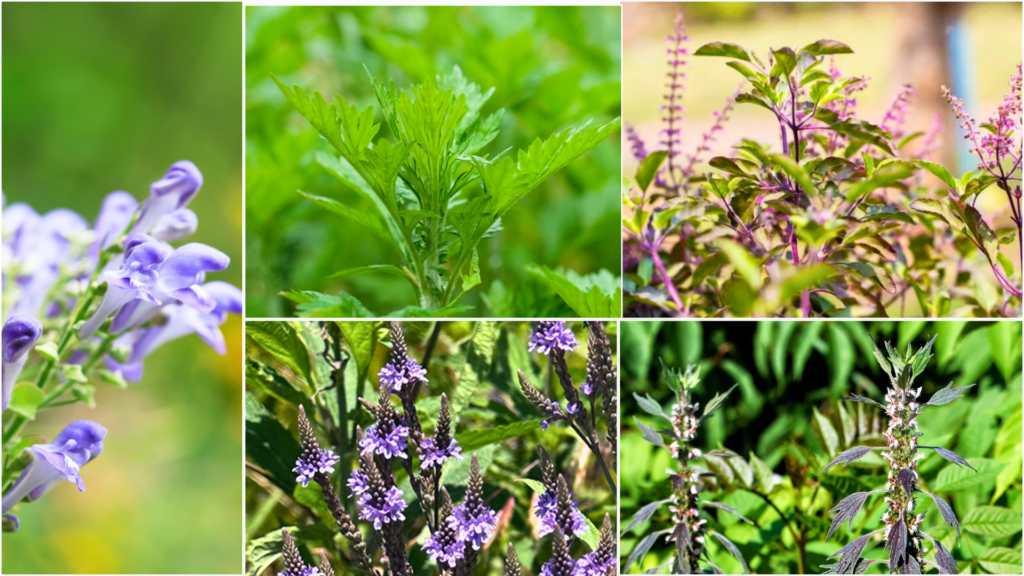
The herbs I want to introduce you to below are allies for this kind of slow and deep embodied learning. They work differently, for different people and different kinds of noise, but they share a common thread: they create the neurological and physiological conditions in which intuition becomes accessible again.
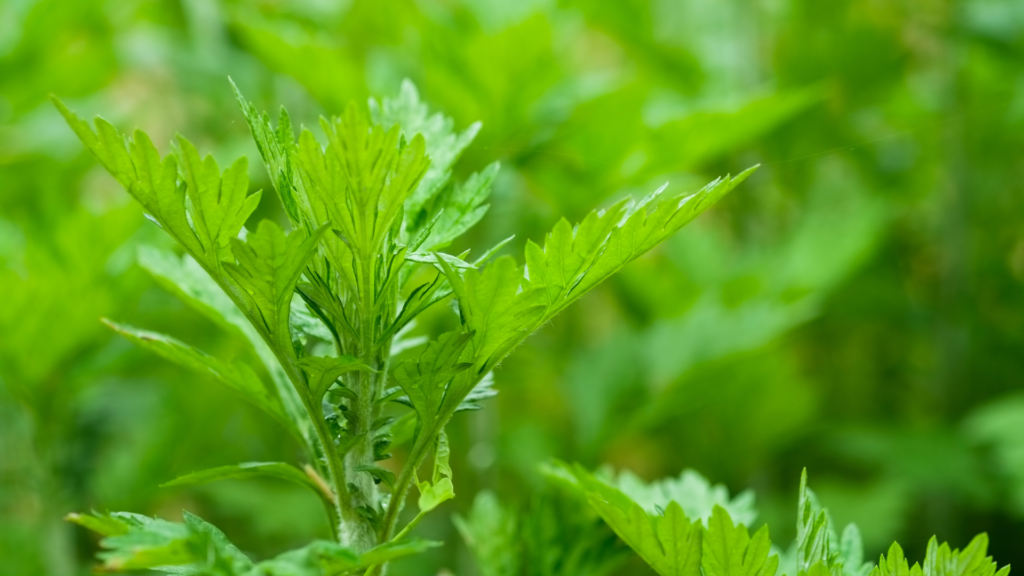
Mugwort (Artemisia vulgaris) The Dreaming Herb. Sacred to Artemis.
Physically, mugwort is a bitter digestive tonic, emmenagogue, and nervine with a dual action: as a nervine, mugwort works on the nervous system in two ways, stimulating when needed while also providing relaxation. This dual nature, calming the body while stimulating the mind, can make it particularly effective for dreamwork. It supports liver function and bile production, eases menstrual irregularity, and has been used in TCM moxibustion for centuries to warm and move stagnant energy.
Energetically, mugwort is the dreaming herb, the opener of liminal space. In Celtic Europe, Druids recognized mugwort as one of their nine sacred herbs, employing it in divination rituals and as protection for travelers journeying between the physical and spirit worlds. She activates the Ajna, the third eye chakra, the seat of inner perception, and supports the integration of dream wisdom into waking life.
How to use: Light evening tea (1 tsp dried herb, steeped 7-10 minutes) before sleep for dream work. Tincture in small doses for daytime nervous system support and intuitive awareness. Dream pillow or sachet near the bed.
Important cautions: avoid in pregnancy or when trying to conceive. Not recommended as a long-term daily tonic due to thujone content. Work with this plant intentionally and respectfully.
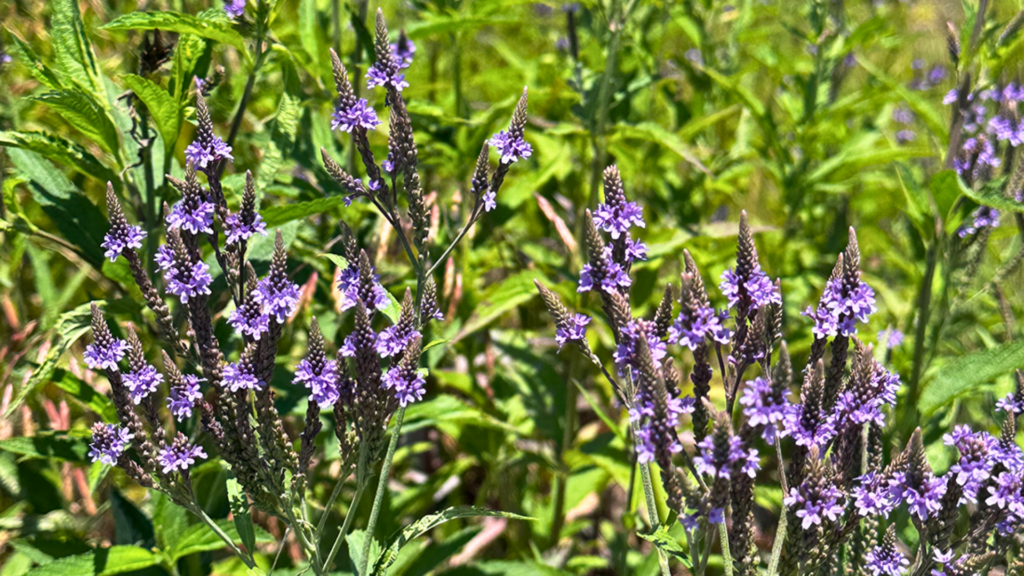
Blue Vervain (Verbena hastata) For the overthinker. For the one who knows but can’t stop analyzing.
Physically, blue vervain is a safe, non-sedating nervine, beneficial as a long-term tonic for anxiety and for feeling overwhelmed. It is especially indicated for those who tend to hold onto ideals or thoughts too strongly, making any sort of change difficult.
It’s a bitter liver herb that moves stagnation in the digestive tract and has antispasmodic action particularly useful for tension held in the neck, jaw, and shoulders, the exact places where overworked, high-achieving people carry their stress. (Think teeth grinding, high-strung type-A personalities.)
Blue vervain is a powerful nervine for those whose minds are always going, always dreaming, always ruminating, always working, always processing. It calms and clears, brings down the frayed wires and nervous overwhelm so common in our current world.
Energetically, this is the herb for the person whose intuition is being drowned out by their own mental noise. The one who senses something clearly but then thinks themselves out of it before acting. Blue vervain quiets the analytical overdrive just enough for the body’s wisdom to get a word in.
How to use: Tincture, 1-2 ml as needed for acute overwhelm, or 2-3x daily as a long-term nervous system tonic. Pairs beautifully with skullcap and motherwort. The tea is intensely bitter, so tincture is generally preferred.
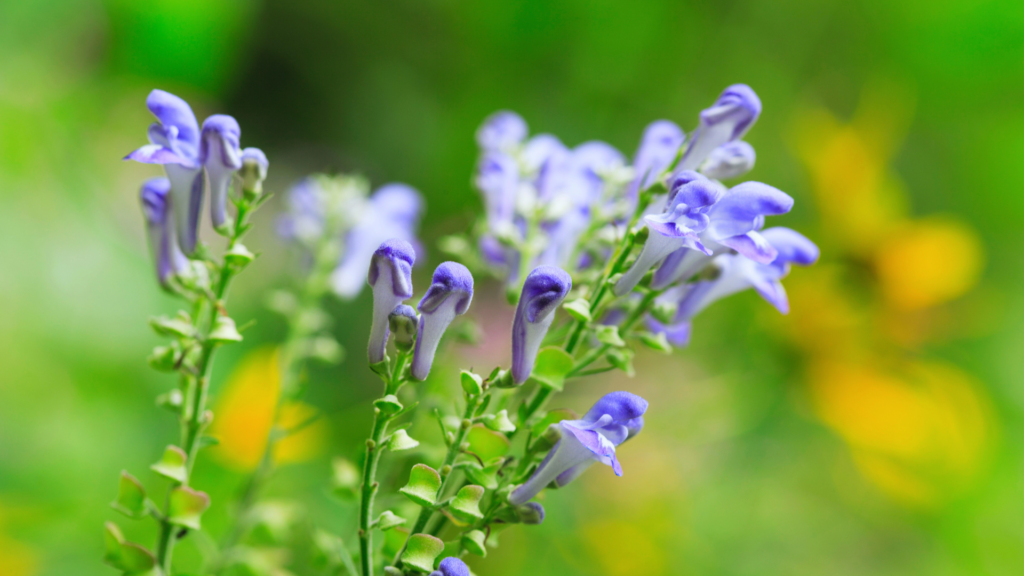
Skullcap (Scutellaria lateriflora) For the tired and wired. For the one who can’t switch off.
Physically, skullcap is both a nervine relaxant and a nervine tonic, meaning it calms in the short term and rebuilds capacity over time. It is effective in cases of insomnia, especially when the mind is still active and ruminative thoughts are a constant feature preventing restful sleep.
It is indicated for people who often feel tired and wired and find it difficult to switch off. It’s antispasmodic, anxiolytic, and has demonstrated mood-supportive effects in clinical research, with its flavonoid compounds, particularly baicalein, showing modulation of GABA receptors and neuroprotective properties.
Energetically, skullcap is the herb for the nervous system that has been running on fumes. When intuition is offline because the whole system is depleted, skullcap begins the deep restoration that makes it possible to hear clearly again. It doesn’t sedate. It nourishes. There’s a meaningful difference.
Skullcap nourishes the nervous system if used over the long term, yet over the short term will relieve anxiety, insomnia and nervous tension. It can be used during the day to restore balance to an overwhelmed and overworked person whose nerves are fried.
How to use: Tincture of fresh or recently dried herb for best effect (quality matters enormously with skullcap; the dried herb loses potency quickly). Tea is also effective. Use consistently over weeks for the tonic effect to accumulate.
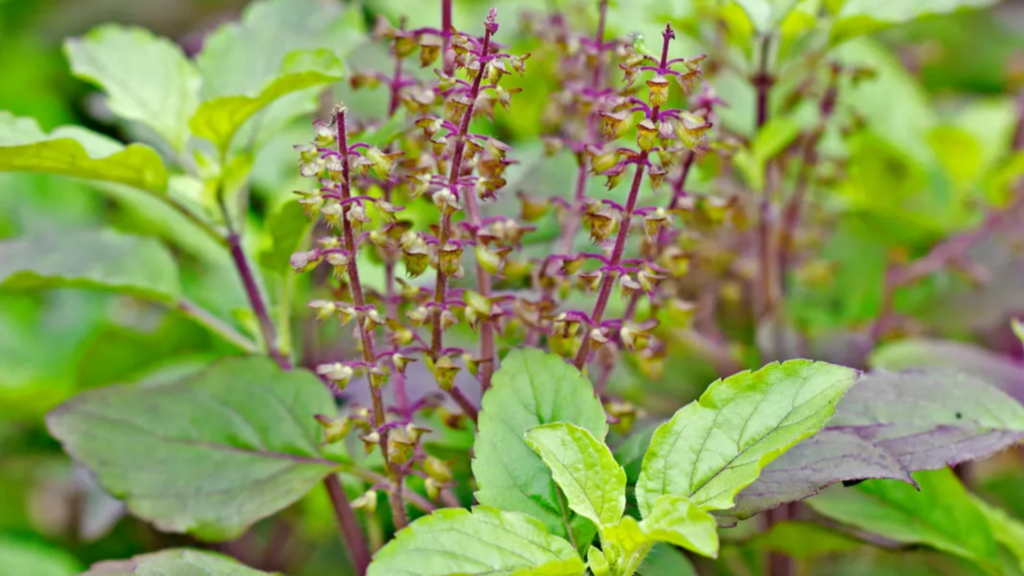
Holy Basil / Tulsi (Ocimum tenuiflorum) The sacred plant. For the one who’s lost their center.
Physically, tulsi is a mild adaptogen, an aromatic nervine, and an immunomodulator with documented antiviral, antibacterial, and anti-inflammatory properties. It supports the HPA axis, moderates cortisol, and has been shown in clinical research to reduce anxiety, improve cognitive function, and support healthy stress response. It’s also a gentle digestive herb, carminative and warming, with affinity for the respiratory system.
Energetically, tulsi is perhaps the most sacred plant in the Ayurvedic tradition. Tulsi is a sacred plant in India, where many households have a pot of this herb by their front door to guard against evil. In Indian folk medicine the leaves are brewed in a tea used as an expectorant, and it is also antiviral and antibacterial for colds and flu.
Tulsi’s deeper medicine is in its capacity to reconnect a person to their own center. Over time, with regular ingestion, holy basil can even out bumps in the road by making it easier for a person to respond to stress. Clients who use it regularly report being less reactive than they usually expect when faced with a stressful situation.
That less reactive quality is where intuition lives. The moment of pause between stimulus and response, the gap where you can actually hear yourself, that’s what tulsi helps protect and expand.
How to use: Daily tea from fresh or dried leaf, 1-2 cups. Tincture. Powder in warm milk or smoothie. This is one of the safest and most accessible of the nervine adaptogens, gentle enough for daily long-term use.
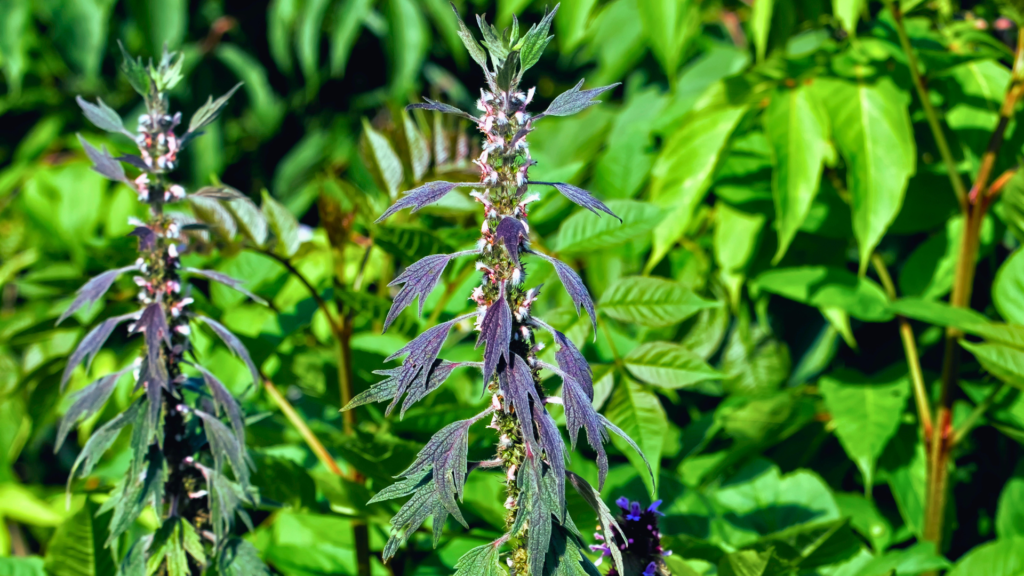
Motherwort (Leonurus cardiaca) For the one who mothers everyone but herself.
Physically, motherwort is a cooling, bitter nervine with a particular affinity for the heart, both the physical organ and the emotional one. It lowers blood pressure, slows a rapid or irregular heartbeat, eases anxiety that manifests as palpitations, and supports hormonal balance across the menstrual cycle.
Motherwort is useful for anxiety when it is associated with heart palpitations and high blood pressure. As an extremely bitter herb it can aid digestion and stimulate the appetite, especially if loss of appetite is associated with nervousness.
Energetically, the name says everything. Motherwort is the herb for the woman who gives everyone else her time, her attention, her wisdom, her care, and has nothing left over for her own knowing. It is so instantly gratifying the way that one can be having a crying jag, or be in a fit of rage, or deeply despairing, and immediately upon taking motherwort, can gain perspective and find one’s center in the storm.
That capacity to find center, to come back to yourself in the midst of everything, is one of the most important preconditions for trusting your own intuition.
How to use: Tincture, 1-2 ml as needed, especially for acute heart palpitations, anxiety spikes, or moments of overwhelm. Tea is possible but intensely bitter. Pairs well with skullcap and blue vervain as a daytime nervine formula.
Caution: avoid in pregnancy.
These five herbs work synergistically together. For nervous system support, blue vervain pairs well with motherwort and skullcap for a generalized anxiolytic tincture to be taken throughout the day. Add tulsi for its adaptogenic centering quality, and mugwort (in small amounts, used intentionally for dream and intuitive work rather than as a daily tonic) completes the picture.
Don’t take this blog as a protocol. This is an invitation to get to know these plants personally, to work with them over time, and to notice what shifts.
Here’s what I’ve learned, through pharmacy training, herbal education, several plant dietas, and years of working with patients and clients:
The most powerful thing a healer can do is be genuinely present to what’s actually happening in front of them. Not to the protocol. Not to the expected outcome. To what’s actually true, right now, in this body, in this relationship, in this moment.
That presence is not a soft skill. It’s a clinical competency. It’s what separates technically correct care from genuinely healing care.
And it requires an intact connection to your own inner knowing.
The plants above are allies in that work. Not replacements for training or critical thinking, but companions on the journey back to a self that thinks and feels and knows, all at once, without having to choose between them.
These plants are powerful initiators.
They are patiently waiting to help you cross the threshold.
If this sparked something and you want to start working more intentionally with nervine and adaptogenic herbs, these two resources are where I’d begin:
Grab my free Natural Medicine Cabinet Remake Guide — practical tools for building a plant-based home apothecary you can actually trust: pages.marinabuksov.com/medicinecabinet
New to herbalism? My guide How to Start Learning Herbs: A Practical Guide for Aspiring Herbalists walks you through exactly how to begin: marinabuksov.com/how-to-start-learning-herbs-a-practical-guide-for-aspiring-herbalists
And if you want to go deeper with your own intuition, healing practice, or relationship to plant medicine, I’d love to connect one-on-one.
→ Want more herbal wisdom like this? Start here.
If you’re feeling stuck, overwhelmed, or unsure where to start on your herbal journey, I’m here to help.
Let’s talk it through together.
I offer a free discovery call where we’ll explore your health or holistic professional career goals and map out supportive first steps tailored just for you.
Book a Complimentary Health Consultation
Book a Holistic Professional Tea Chat
 Ready to transform your medicine cabinet? The Natural Medicine Makeover Guide helps you swap synthetic fixes for safe, effective natural remedies. Packed with expert tips from a pharmacist + herbalist, it’s your go-to resource for a healthier, holistic lifestyle. Plus, see my favorite products in my herbal dispensary.
